Headache and neck pain
Cervicogenic headaches: when your headache is really a neck problem
Cervicogenic headache explained — how to recognise a headache coming from the neck, desk-posture triggers, exercises that help, how osteopathy treats it and headache red flags.
Not every headache starts in the head. A cervicogenic headache is a headache that is actually caused by a problem in the neck — typically the upper three vertebrae and the muscles and joints around them. It is one of the most under-diagnosed causes of recurring headache, because the pain is felt in the head even though the driver is in the neck. This guide explains how to recognise one, what you can do about it yourself, and when hands-on assessment is worth arranging.
What is a cervicogenic headache?
The upper neck and the head share nerve pathways — the nerves that supply sensation to the top of the neck also carry sensation from the back of the head, the temples and, for one branch, behind the eye. When joints, muscles or discs in the upper neck become irritated or stiff, the brain can misattribute the pain source and read it as head pain. This is called referred pain.
The result is a headache that feels like it starts at the base of the skull or travels up and over to the eye — typically on one side — and that flares with neck positions and movements rather than with the triggers of migraine or tension-type headache.
Signs your headache is coming from your neck
No single symptom confirms a cervicogenic headache, but the pattern is distinctive:
- Usually one-sided, without swapping sides between episodes.
- Starts in the neck or base of the skull, then spreads to the forehead, temple or behind the eye.
- Worse with certain neck movements or postures — prolonged computer work, looking down at a phone, sleeping awkwardly.
- Stiff, uncomfortable neck alongside the headache; turning your head may be restricted or provoke the pain.
- Builds through the working day and eases at weekends or on holiday — a strong sign posture and desk load are involved.
- Not accompanied by migraine features such as nausea, light sensitivity with vomiting, visual aura or a predictable attack pattern lasting 4–72 hours.
Headaches can also be mixed — a migraine sufferer can additionally have neck-driven headaches — which is why a proper history matters more than a symptom list.
Why desk workers get them so often
Hours in one posture load the upper neck continuously. When the head sits forward of the shoulders, the small muscles at the back of the upper neck work statically for hours, the upper neck joints stiffen, and the deep neck muscles switch off — the same pattern we describe in our desk posture and back pain guide. The neck pain is often surprisingly mild; the headache is what actually brings people in.
What you can try at home
If your headache fits the pattern above and there are no red flags, these habits often reduce frequency within a few weeks:
- Chin tucks. Draw the chin gently back over the neck — as if making a double chin — hold 5 seconds, repeat 10 times, twice a day. This reloads the deep neck muscles that long sitting switches off.
- Move the upper back. Thoracic extension over the back of a chair, 8 repetitions mid-morning and mid-afternoon, keeps the mid-back from stiffening into the posture that loads the neck.
- Raise the screen. Top of the screen at eye level, about an arm's length away, so the chin stays level. Laptop users need a separate keyboard and raised screen.
- Break the static load. Change position every 30–40 minutes. A two-minute walk resets the neck more effectively than stretching at the desk.
- Check sleep position. A pillow that keeps the neck in line with the spine — neither flexed nor tilted — often reduces morning headaches.
The aim is consistent, comfortable movement — not aggressive stretching. If an exercise reproduces or worsens your headache or sends pain or tingling into the arm, stop and get assessed instead.
How an osteopath can help
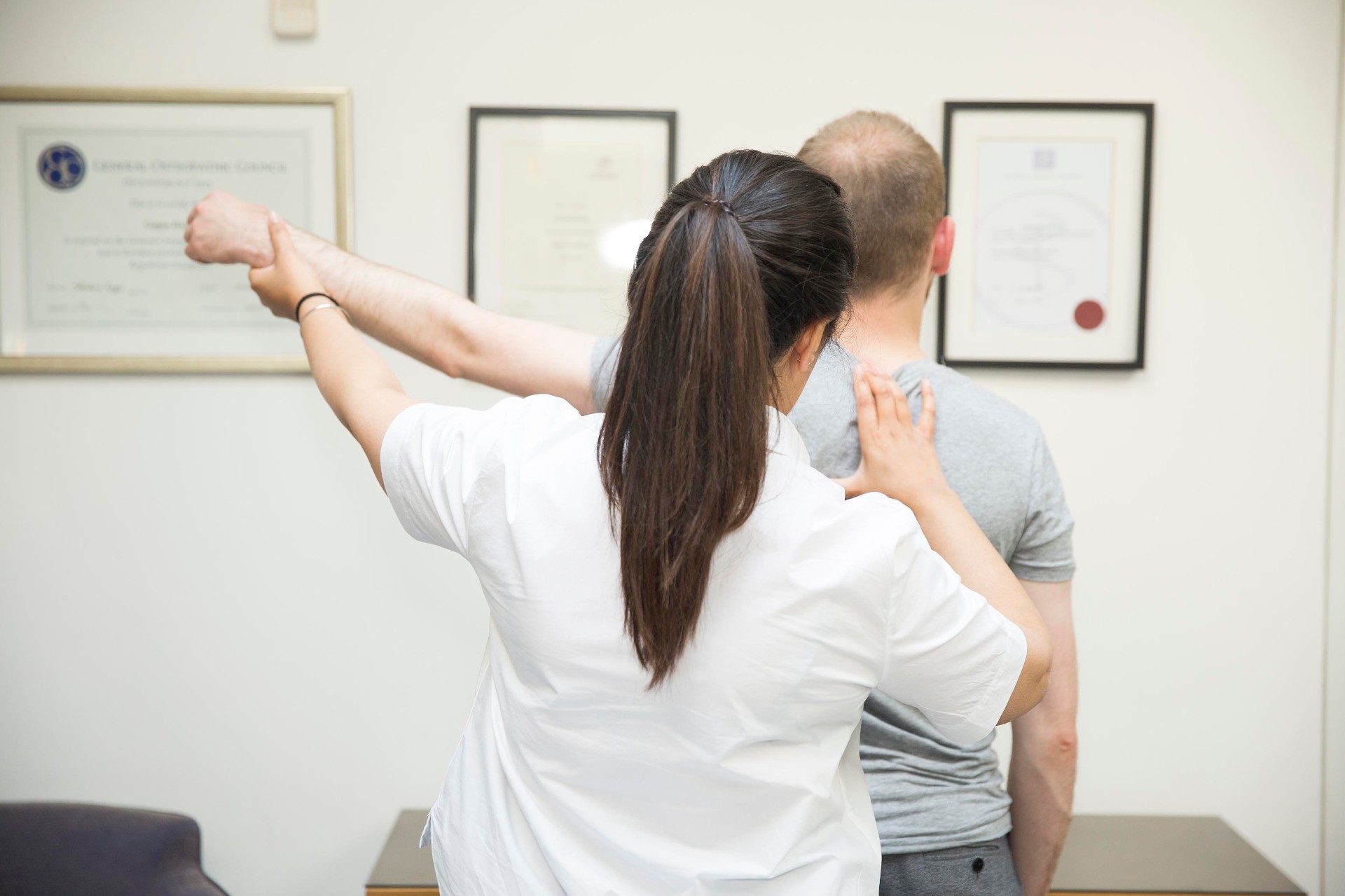
A cervicogenic headache should improve when the upper neck is treated — which makes it one of the more satisfying headache types to work with. Assessment examines how the upper neck joints and surrounding muscles move, and whether reproducing that movement provokes your usual headache. Treatment typically combines:
- Hands-on mobilisation of the stiff upper neck and upper back segments.
- Soft-tissue work to the overloaded neck and shoulder muscles.
- A short, specific exercise programme to hold the improvement between sessions.
- Practical workstation and sleep advice aimed at the loads that started it.
Where muscle tension and joint irritation are driving ongoing inflammation, treatment may also include K-Laser therapy alongside hands-on care. And where the headache pattern looks more migraine-like than neck-driven, the right outcome of assessment is a referral to your GP rather than continued treatment — good practice knows its limits.
When to arrange an assessment
- Headaches recurring weekly, or building through most working days.
- Headaches that have not improved after a few weeks of the self-care above.
- Neck stiffness, restricted movement or arm symptoms alongside the headaches.
- Headaches that keep returning despite ruling out common triggers.
If headache medicine is needed more days than not, that pattern itself deserves an assessment — both for the neck and to review the headache pattern with your GP.
Sources and further reading
- NHS: Headaches — types, self-care and when to seek help
- PubMed: research on manual therapy for cervicogenic headache
This guide provides general information, not a diagnosis. Headache red flags always warrant medical assessment rather than neck treatment.