Back and leg pain
Sciatica and slipped disc: symptoms, recovery and when to seek help
Sciatica or a slipped disc? Learn the differences, symptoms, safe activity advice, treatment options in Potters Bar and when to seek urgent medical help.
Sciatica and a slipped disc are related, but they are not the same thing. Sciatica describes nerve pain travelling from the lower back into the buttock and leg. A slipped disc — also called a herniated or prolapsed disc — is one possible cause. Understanding the difference helps you decide when to keep moving, when to arrange an assessment and when to seek urgent medical help.
What is the difference between sciatica and a slipped disc?
Discs sit between the bones of your spine and help cushion movement. A herniated disc happens when its soft inner material bulges out through the outer layer. The term “slipped” is misleading: the disc does not simply slide out of place.
If a disc irritates or presses on a nerve root in the lower back, it can cause sciatic pain. However, not every slipped disc causes symptoms, and sciatica can have other causes, including narrowing around the spinal nerves (spinal stenosis). Back pain alone does not necessarily mean you have sciatica or a disc injury.
Common sciatica and slipped-disc symptoms
Sciatica usually affects one side, from the buttock down the back of the leg, sometimes reaching the foot and toes. Symptoms may include:
- Sharp, burning or shooting leg pain, sometimes worse than the back pain.
- Pins and needles or numbness in part of the leg or foot.
- Weakness in the affected leg or foot.
- Pain that increases with coughing, sneezing or certain movements.
A slipped disc can also cause lower-back pain without leg symptoms. Similar symptoms can come from other conditions, so a symptom checklist cannot confirm the diagnosis. New or worsening weakness, including difficulty lifting the front of your foot, needs prompt medical assessment.
What can help sciatica at home?
If you have no emergency warning signs, gentle activity is generally preferable to spending long periods in bed. Many episodes improve over a few weeks to a few months, although recovery varies and some last longer.
- Keep moving little and often. Try short walks and everyday activities within your tolerance rather than one long session.
- Change position regularly. Break up prolonged sitting or lying down. There is no single perfect sitting or sleeping position; use positions that feel comfortable.
- Adapt aggravating tasks. Temporarily reduce heavy lifting or movements that clearly worsen leg symptoms, then build back gradually as symptoms allow.
- Ask about pain relief. A pharmacist or GP can advise what is appropriate for you, considering your other medicines and health conditions. Some commonly used pain medicines offer limited benefit for sciatica and can have side effects.
Which exercises are best for sciatica or a slipped disc?
There is no universal sciatica stretch or exercise that suits everyone. What helps one person may worsen another person’s nerve pain. Start with comfortable movement, such as a short walk, and seek tailored advice before forcing stretches or following a demanding online routine.
Stop an exercise if it clearly increases pain travelling down the leg, numbness or weakness. New or worsening neurological symptoms should be assessed rather than exercised through. As symptoms settle, a clinician can help you progress mobility, strength and the activities you want to return to, whether that is desk work, gardening or running.
Our desk posture and back pain guide covers general workstation habits, but its exercises are not a substitute for individual advice when you have sciatic nerve symptoms.
When should you see a GP, and do you need an MRI?
See a GP if symptoms are getting worse, stop you doing normal activities, or have not improved after a few weeks of self-care. Seek prompt medical advice for new leg weakness, fever or feeling unwell, unexplained weight loss, a history of cancer, or pain following a significant injury. Use NHS 111 if you are unsure how urgently you need help.
A clinical assessment usually comes before a scan. NICE does not recommend routine imaging for low-back pain or sciatica in a non-specialist setting. A specialist may consider an MRI when the result would change your treatment, or when serious causes are suspected. A scan finding alone does not tell the whole story about your symptoms.
How can an osteopath help with sciatica in Potters Bar?
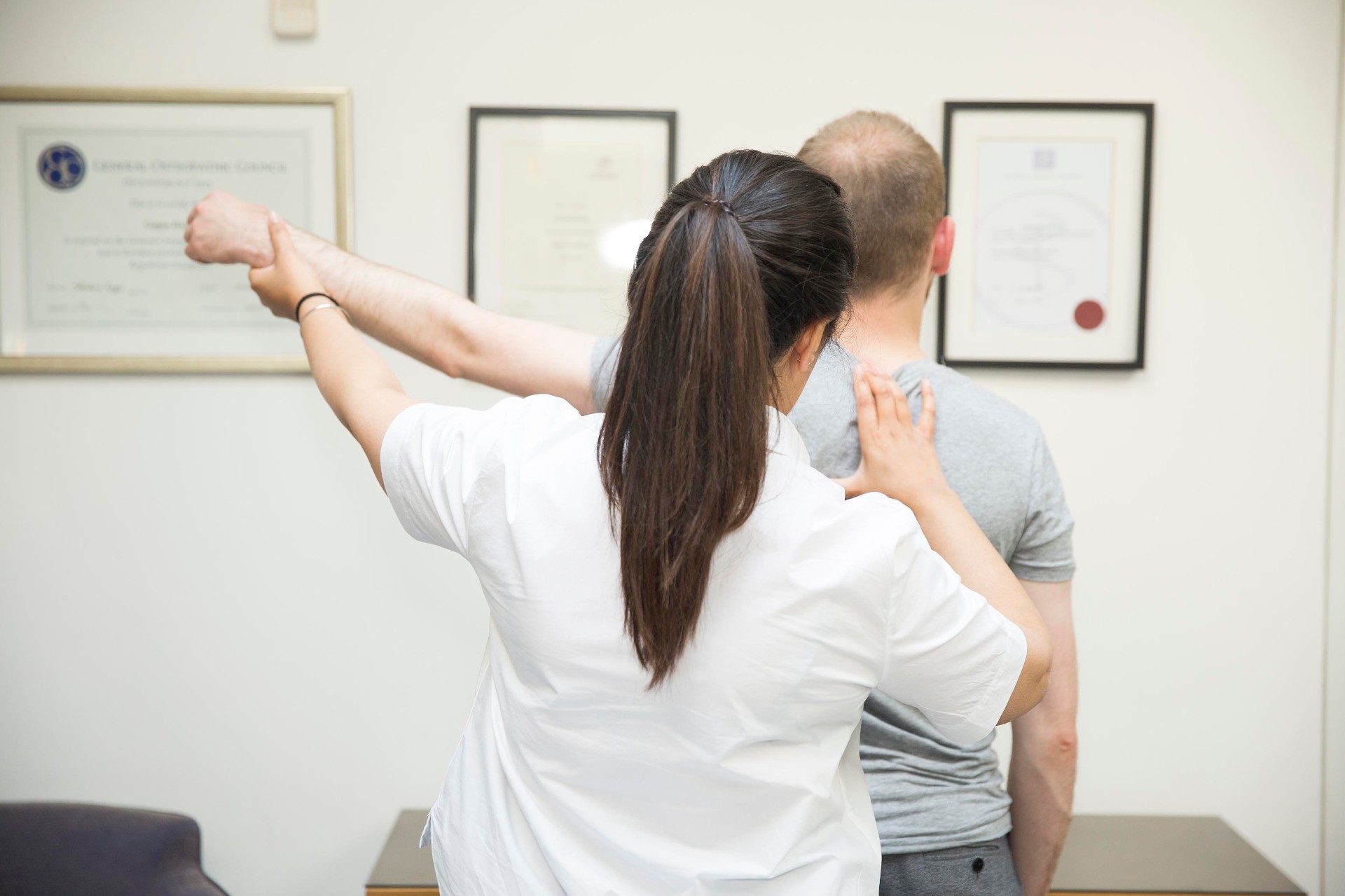
An assessment at Potters Bar Spine Clinic can explore your symptoms, movement and daily activities, and whether osteopathic care is suitable. Where appropriate, treatment may combine advice, graded exercise and hands-on care. If your findings need medical investigation, the priority is referral, not continuing treatment.
NICE advises considering manual therapy only as part of a treatment package that includes exercise, with or without psychological support. Hands-on treatment does not “push a slipped disc back in”, and no treatment can guarantee a cure or a fixed recovery time.
You can also read about K-Laser therapy at the clinic. It is not a way to reposition a disc or a replacement for urgent assessment of nerve compression. Any additional treatment should be discussed in the context of your individual symptoms and the available evidence.
Does a slipped disc always need surgery?
No. Many people improve without surgery, using activity advice, rehabilitation and appropriate symptom management. A specialist may consider surgery when non-surgical care has not improved pain or function and scan findings match the symptoms. Serious or progressive nerve problems may need a more urgent specialist pathway.
Sources and further reading
- NHS: Sciatica — symptoms, self-care and emergency advice
- NHS: Slipped disc — diagnosis and treatment
- NICE NG59: Low back pain and sciatica in over 16s
This guide provides general information, not a diagnosis or an individual treatment plan. For emergency warning signs, seek hospital care rather than using the booking link below.