Back and leg pain
Sciatica exercises: what helps, what to avoid and when to get assessed
Gentle sciatica exercises that help nerve pain settle — five movements to try, how often to do them, mistakes to avoid, and when to see an osteopath in Potters Bar.
If you have sciatica — pain travelling from your lower back or buttock down the back of your leg — exercise is one of the most useful things you can do for it. Movement helps most episodes of sciatic nerve pain settle faster than rest does. The key is choosing the right exercises for your symptoms, doing them comfortably, and knowing the warning signs that mean you should stop and get assessed instead.
Why movement helps sciatica
The sciatic nerve runs from the lower back, through the buttock and down the leg. When it is irritated — by a disc, narrowed joints or tight muscle around it — the instinct is to protect it by resting. But prolonged rest stiffens the back, weakens the muscles that support the spine and often makes the pain more persistent, not less.
Gentle, regular movement does several things: it keeps the joints and muscles from stiffening, improves blood flow to the irritated tissues, and gradually restores the nerve's tolerance to being moved, bent and loaded. Clinical guidelines for sciatica consistently recommend staying active and progressive exercise over bed rest.
The golden rule: move within comfort
There is no single exercise that works for everyone with sciatica. What helps one person's nerve pain can aggravate another's, depending on what is irritating the nerve and where. So the rule is simple:
- An exercise should feel comfortable or mildly stretching — never sharp, burning or shooting.
- Symptoms should not travel further down the leg as you do it. If pain that started in your buttock reaches your calf mid-exercise, stop.
- How you feel the next morning matters more than how you felt during the session. If symptoms are worse the next day, do less.
Five gentle exercises to try for sciatic pain
Start with two or three of these, once or twice a day, in comfort. None of them should provoke leg pain.
- Knee rolls, lying on your back — knees bent, feet flat on the bed or floor. Slowly let both knees roll a little to one side, then the other, 10 times each way. This mobilises the lower back without loading it.
- Single knee to chest — lying down, draw one knee gently towards your chest and hold for 10 to 20 seconds, then swap. Five each side. If pulling the knee up sends pain into the leg, do it less deeply or skip it.
- Sciatic nerve glide ("nerve flossing") — sitting tall on a chair, slowly straighten one knee while tipping your chin down, then bend the knee as you look up. A slow, small, pain-free rhythm — about 10 repetitions. This is designed to help the nerve slide rather than being stretched, but it is the easiest exercise to overdo: keep the range small and stop at the first hint of leg symptoms.
- Glute bridges — lying on your back, knees bent, push through your heels to lift the hips a small amount, 8 to 12 repetitions. Waking up the glutes takes load off the lower back and reduces pressure through the buttock, where the nerve passes.
- Short, frequent walks — two to five minutes at a time, several times a day, building gradually. Walking is the most underrated sciatica exercise there is; if walking is painful, walk shorter and more often rather than pushing through a long walk.
If your leg pain eases when you sit and worsens when you arch back, or eases when you lean forward and worsens when you walk, your presentation may suit different positions again — this pattern (often linked to spinal stenosis in older adults) is described in our back pain in older adults guide.
How often, and for how long?
Little and often beats long sessions. Ten minutes twice a day, every day, does more than an hour of stretching once a week. Most episodes of sciatica improve noticeably over two to six weeks with this kind of consistent, comfortable activity — though recovery times vary, and some cases take longer.
As symptoms settle, shift the emphasis from relief exercises to rebuilding capacity: hip and glute strength, core endurance, and a graded return to whatever your pain stopped — desk work, gardening, running. Stopping at "the pain has gone" without rebuilding is the commonest reason sciatica keeps returning.
Common mistakes with sciatica exercises
- Stretching aggressively. Forcing a hamstring or back stretch into tension often irritates the nerve further. Mild and comfortable, not strong and grippy.
- Pushing into pain to "fix" it. Pain that travels further down the leg during an exercise is a signal to stop, not to push through.
- Copying a video routine. Online routines are designed for a general audience; with nerve symptoms, the right exercise depends entirely on your findings.
- Complete bed rest. More than a day or two of near-total rest usually slows recovery and deconditions the back.
- Stopping the moment pain eases. The last phase — strength and graded loading — is what prevents the next episode.
When exercises alone are not enough
Get assessed rather than continuing to self-manage if:
- Leg pain or pins and needles has not improved after two to three weeks.
- Symptoms are getting steadily worse despite gentle activity.
- You have new weakness — for example, difficulty lifting the front of the foot.
- Pain wakes you at night or is severe enough to stop you sleeping.
- Repeated flare-ups keep interrupting your work or training.
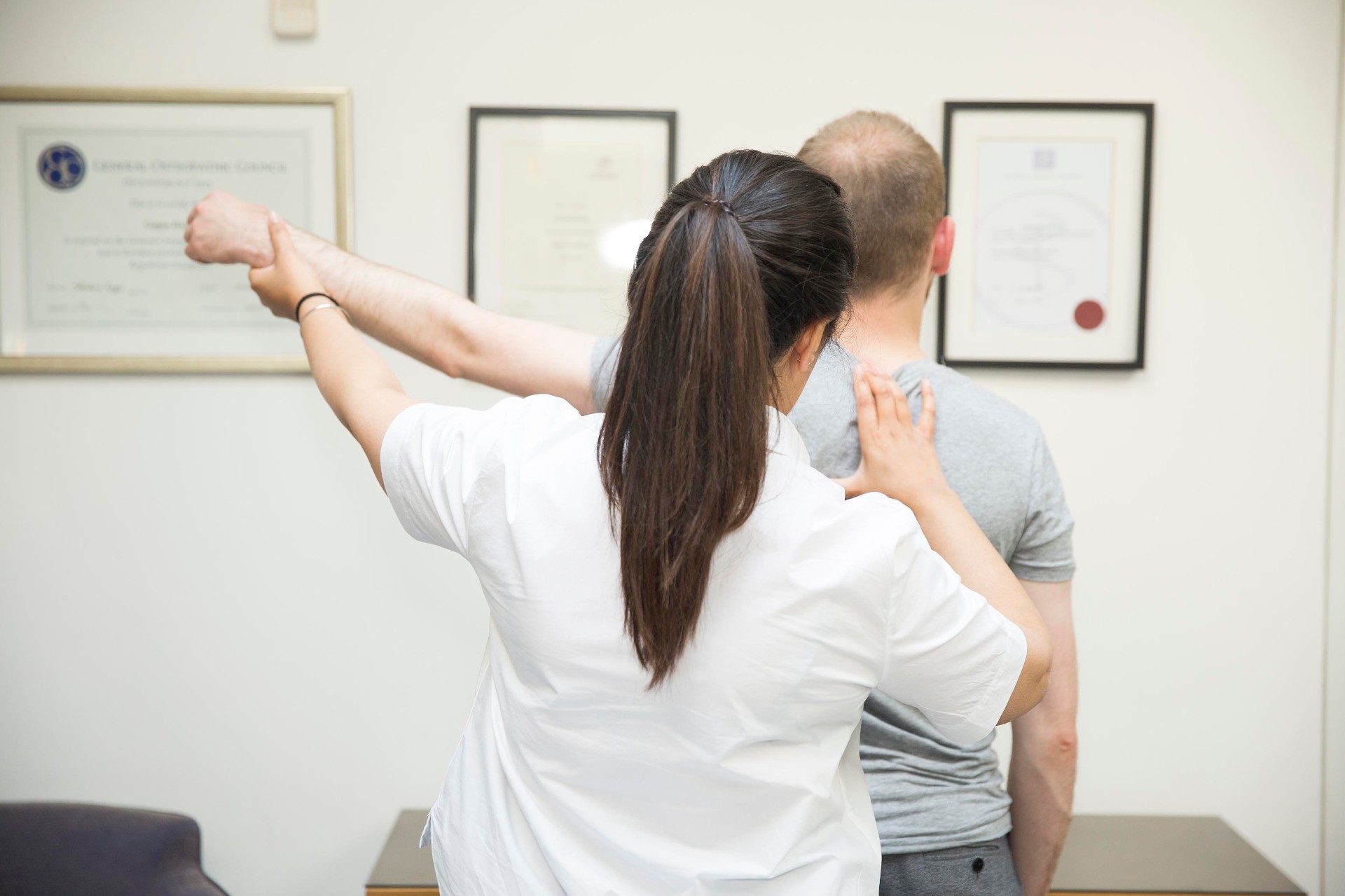
An assessment at Potters Bar Spine Clinic identifies what is actually irritating the nerve — disc, joint, muscle or a stiff segment above — and builds an exercise programme around your specific findings rather than a generic handout. Hands-on treatment can restore the movement the exercises cannot reach, and where inflammation is a significant driver, K-Laser therapy can reduce it alongside the rehabilitation work.
Sources and further reading
- NHS: Sciatica — self-care and emergency advice
- NICE NG59: Low back pain and sciatica — staying active and exercise recommendations
This guide provides general information, not a diagnosis or an individual exercise prescription. Stop and seek medical care for any emergency warning signs.